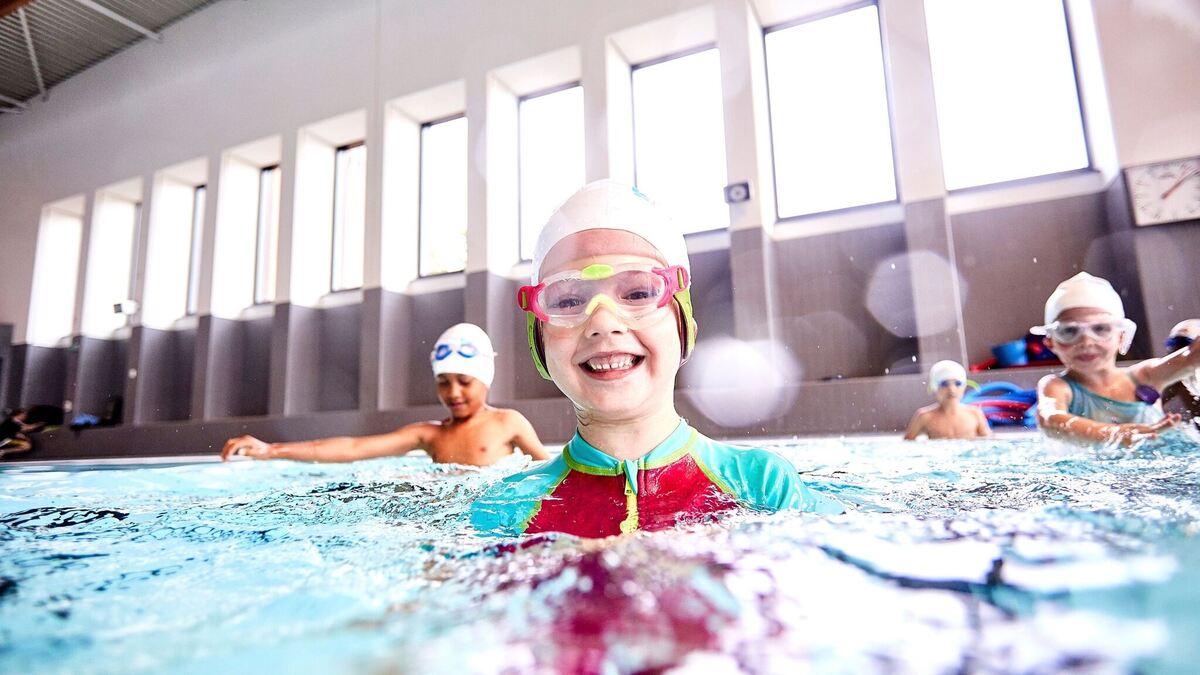
Whether you're looking to build trust and confidence with new swimmers or simply add more variety to your teaching style, incorporating games into your swimming lessons can transform the learning experience.
Fast-paced, interactive lessons create excitement and keep swimmers fully engaged, while repetitive movements within games naturally accelerates skill development. Games also introduce an element of fun that can reduce anxiety, encourage participation, and help learners build confidence in the water.
Here are some creative game ideas for swimming teachers looking for lesson planning inspiration.
The Bean Game
The Bean Game is a fantastic warm-up activity that combines imaginative play with skill development. Using clear and concise instructions alongside fun movements helps capture learners' attention from the very start of the lesson.
How to play:
The teacher calls out the name of a bean and the swimmers perform actions to create the shape of that bean. For example, when 'baked bean' is called, participants perform a tuck float and when 'broad bean' is called, learners stretch out in a star-shaped position.
Equipment:
No equipment is required for this game, making it a great lesson starter, but the game can be made more advanced with different actions as swimmers progress.
This game is particularly effective for younger or nervous swimmers, as it encourages movement and water confidence in a relaxed and playful environment, while helping to reduce fears and anxieties.
Kick of War
The best swimming games are the ones where learners develop essential aquatic skills without realising it, because they're fully immersed in the activity. The competitive nature of this activity achieves this perfectly.
How to play:
In pairs or groups, learners hold different sides of a kick board or large float. The aim of the game is to try to push opponents backwards through the force of kicking, helping swimmers to build stamina, buoyancy and balance.
Equipment:
One kick board or large float per group.
Kick of War uses repetitive kicking movements and friendly competition to strengthen technique, build stamina and improve body position in the water. The competitive element keeps swimmers motivated and engaged throughout the exercise.
Sculling Train
Sculling is an important and life-saving skill which is essential for all swimmers to develop. The Sculling Train game is a fun and engaging introduction to treading water. Swimmers develop buoyancy awareness and improve arm movements while working together as a team.
How to play:
This game develops swimmers' hand technique sand arm position as they're moving through the water. Learners create the sculling train by linking their floats together, focusing on solely using their hands and keeping their face afloat.
Equipment:
One noodle float per swimmer, which are linked together to form the sculling train.
This activity helps learners gain confidence in deeper water while reinforcing important life-saving skills in an enjoyable way. Once swimmers have mastered this skill, they can practise treading water without the floats.
Treasure Hunt
Creative themes help to make swimming techniques more engaging to learn. For example, swimmers might drift through space like astronauts when practising floating skills or dive for treasure to improve underwater confidence.
Treasure Hunt is a purposeful game that combines imagination with exploration to reduce fears around going underwater.
How to play:
Toys are scattered around the pool area for swimmers to gather and return to the side of the pool. This enables learners to travel through the water in a variety of ways and explore their own abilities. It also enhances aquatic breathing and coordination skills.
A combination of floating and sinking items can be used to encourage swimmers to travel underwater as well as on the surface.
Equipment:
A variety of floating and sinking toys.
Adding themes to individual lessons or series of lessons can create energy, excitement and anticipation among swimmers. Why not take a look at our superhero themed lesson activities and games or our animal themed teaching ideas for more inspiration?
Why Creative Lesson Planning Matters
Creative lesson planning helps swimmers feel safe, confident and motivated while developing essential aquatic skills. Engaging lessons improve concentration, encourage participation and support faster skill progression - all while making swimming enjoyable.
For teachers and coaches looking to improve lesson pace, behaviour management and learner progression, professional development can provide fresh inspiration and practical techniques.
If you're passionate about delivering high-energy, engaging lessons, our interactive Lesson Planning e-learning course is a great place to begin. This course is perfect for swimming teachers who want to create more dynamic lessons, improve learner engagement and accelerate skill development in a fun and supportive environment.
Interested in a Career as a Swimming Teacher?
If these creative ideas have piqued your interest and you're keen to get started as a swimming teacher, our SEQ Learn to Swim Helper eLearning course is perfect for anyone aged 14 years or older. This exciting online course offers a great way to gain experience and volunteer at swimming lessons.
After gaining confidence poolside, you'll be ready to dive into the Level 1 Swimming Assistant course or the Level 2 in Teaching Swimming (both age 16+). The Swim England Level 1 Swimming Assistant course offers a brilliant way to begin this exciting career path, teaching you how to support the delivery of high quality swimming lessons, while building your confidence alongside the swimming teacher.
Our brand new SEQ Level 2 in Teaching Swimming course is a streamlined route into swimming teaching that can be started with no experience, or after gaining skills and practical experience from the Learn to Swim Helper or Level 1 Swimming Assistant courses.
View all courses in your area here.